ELECTRICIAN
PROGRAM
What you will do:
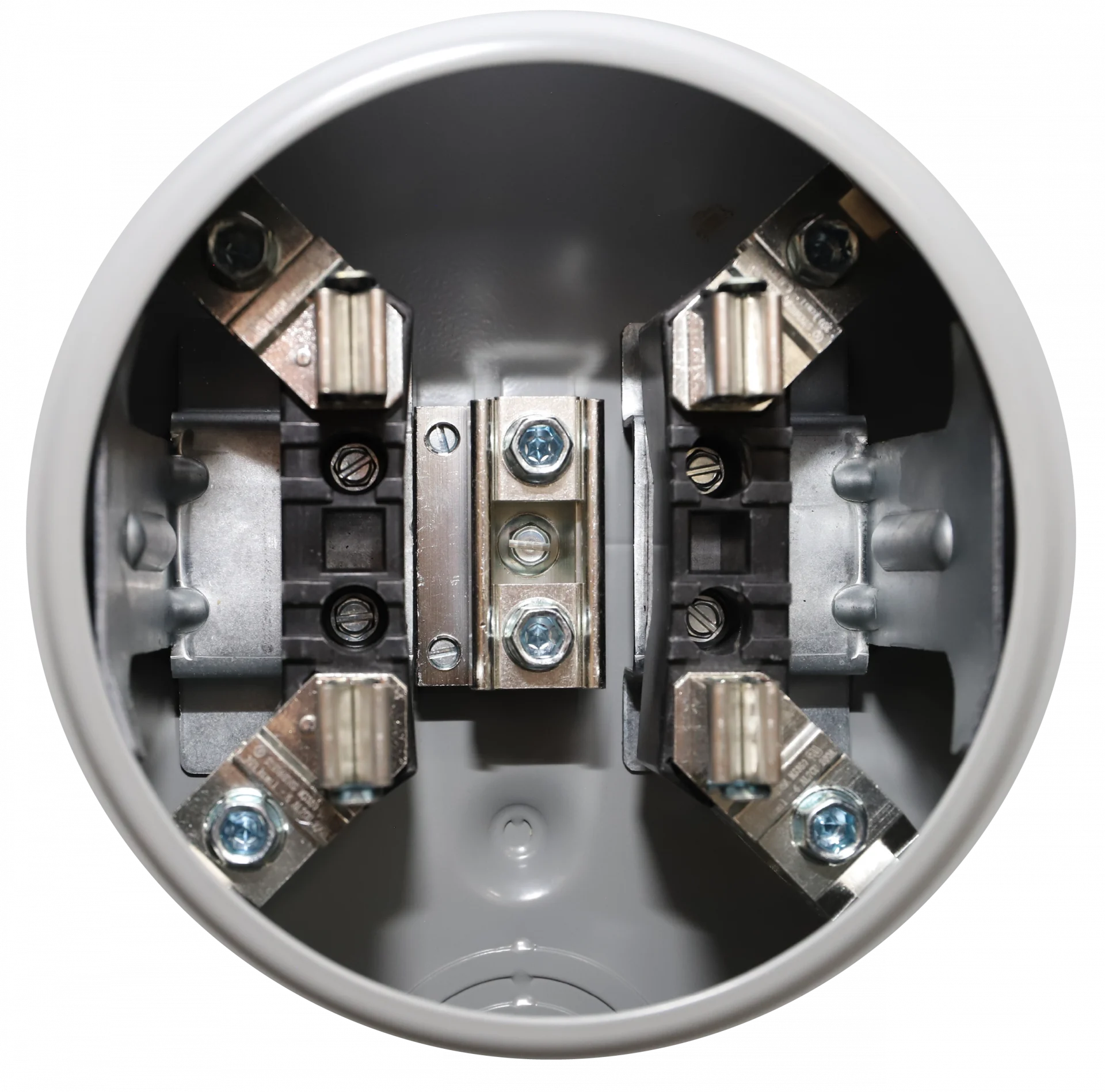
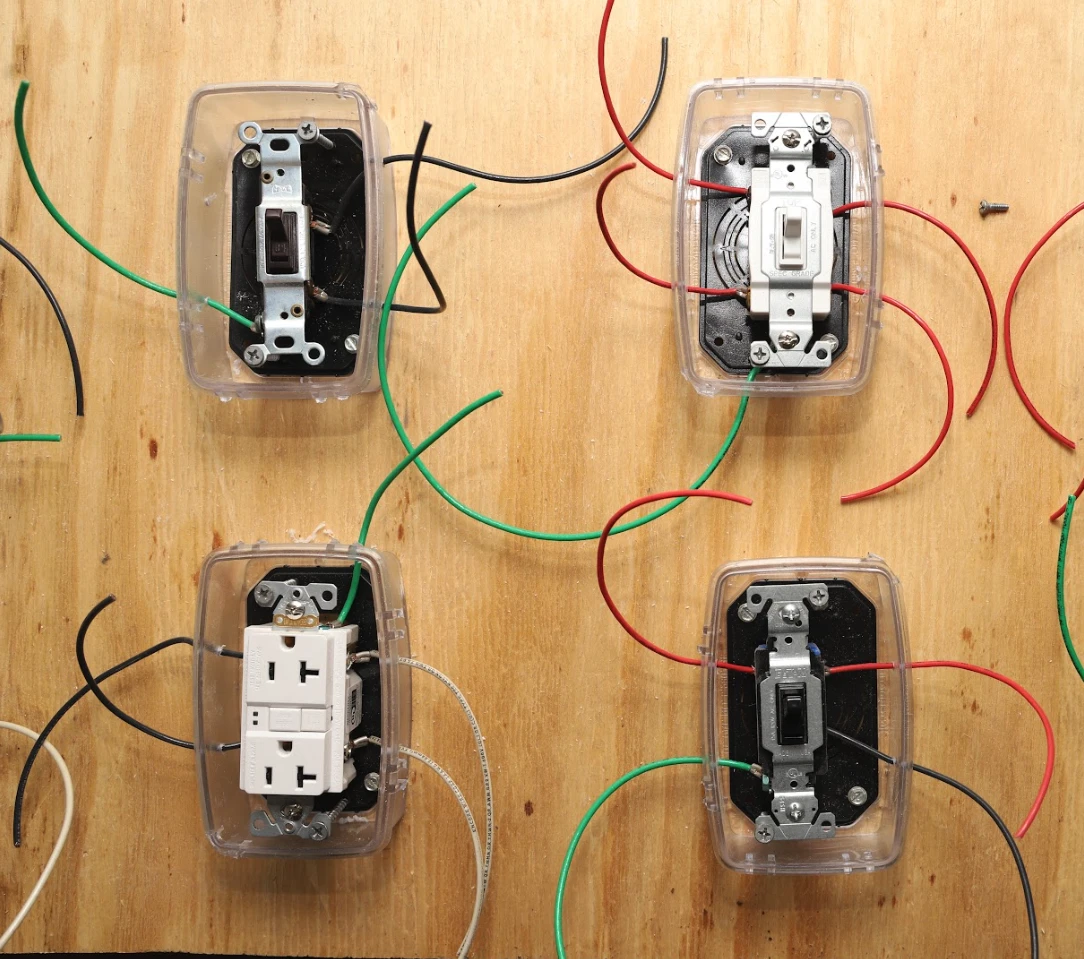
The Residential and Commercial Electrician program is designed to equip students with the occupational skills and technical knowledge required for entry-level employment in the electrical trade. Students receive hands-on training in residential and commercial wiring, conduit bending, electrical panel installation, grounding and bonding, lighting systems, motor controls, programmable logic controllers, and circuit troubleshooting.
The curriculum emphasizes safety practices, blueprint reading, project estimating, the National Electrical Code, electrical theory, and renewable energy systems. Students also develop skills in low-voltage systems, service equipment installation, and energy-efficiency technologies.
What the numbers say:
Skills you'll walk out with:
10 things you will be able to do — across residential, commercial, controls, and safety — before you graduate.
Apply electrical theory and mathematical concepts to residential and commercial electrical systems
Interpret and apply electrical codes and industry standards to ensure safe and effective electrical installations
Read and use electrical schematics, prints and blueprints to plan, perform and verify system installations and modifications
Select, install and service conductors, wiring methods, panels, motor controls, programmable logic controllers and emerging energy systems.
Perform load calculations, equipment selection and energy-efficiency assessments for residential and commercial projects
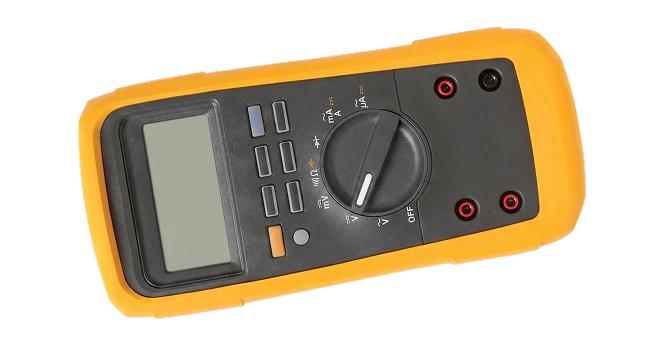
Diagnose and repair faults in circuits, motors, lighting, receptacle and control systems using systematic troubleshooting methods and test equipment
Plan and manage electrical projects by applying principles of scheduling, cost estimation, material selection and customer communication
Demonstrate proficiency with industry tools, technologies and digital applications used in the electrical trades
Exhibit professionalism, effective communication and workplace-readiness skills, including teamwork, conflict resolution, résumé preparation and job-search strategies
Uphold ethical and responsible practices in energy use, sustainability and workplace conduct to support long-term career growth in the electrical trade
The program, broken down.
FUNDAMENTALS
Electricity I • Introduction to National Electric Code (NEC)
APPLIED GENERAL EDUCATION
Technology for the Trades • Mathematics for the Trades • Energy Sciences for the Trades
RESIDENTIAL SYSTEMS
Electricity II • Residential Wiring • Blueprints and Schematics
COMMERCIAL AND ADVANCED SYSTEMS
Motor Controls • Renewable Energy • Project Management and Estimating • Commercial Wiring • Programmable Logic Controllers • Troubleshooting Electrical Systems
CAREER PREPARATION
Professionalism • Capstone
Get the full guide.
Tuition. Financial aid. Sample schedule. What to expect on day one. PDF, no spam, straight to your inbox.
Real numbers, real schedule, no sales pitch. Know exactly what you’re signing up for before you commit. Straight to your inbox.
Where the career goes.
Graduates receive industry-recognized credentials and training, and are prepared to pursue entry-level employment in roles including:
10-Hour Safety Certification
Occupational Safety and Health Administration 10-Hour Safety Certification
Online
Training
Online training in NFPA 70, the National Electrical Code, through the National Fire Protection Association
Where?

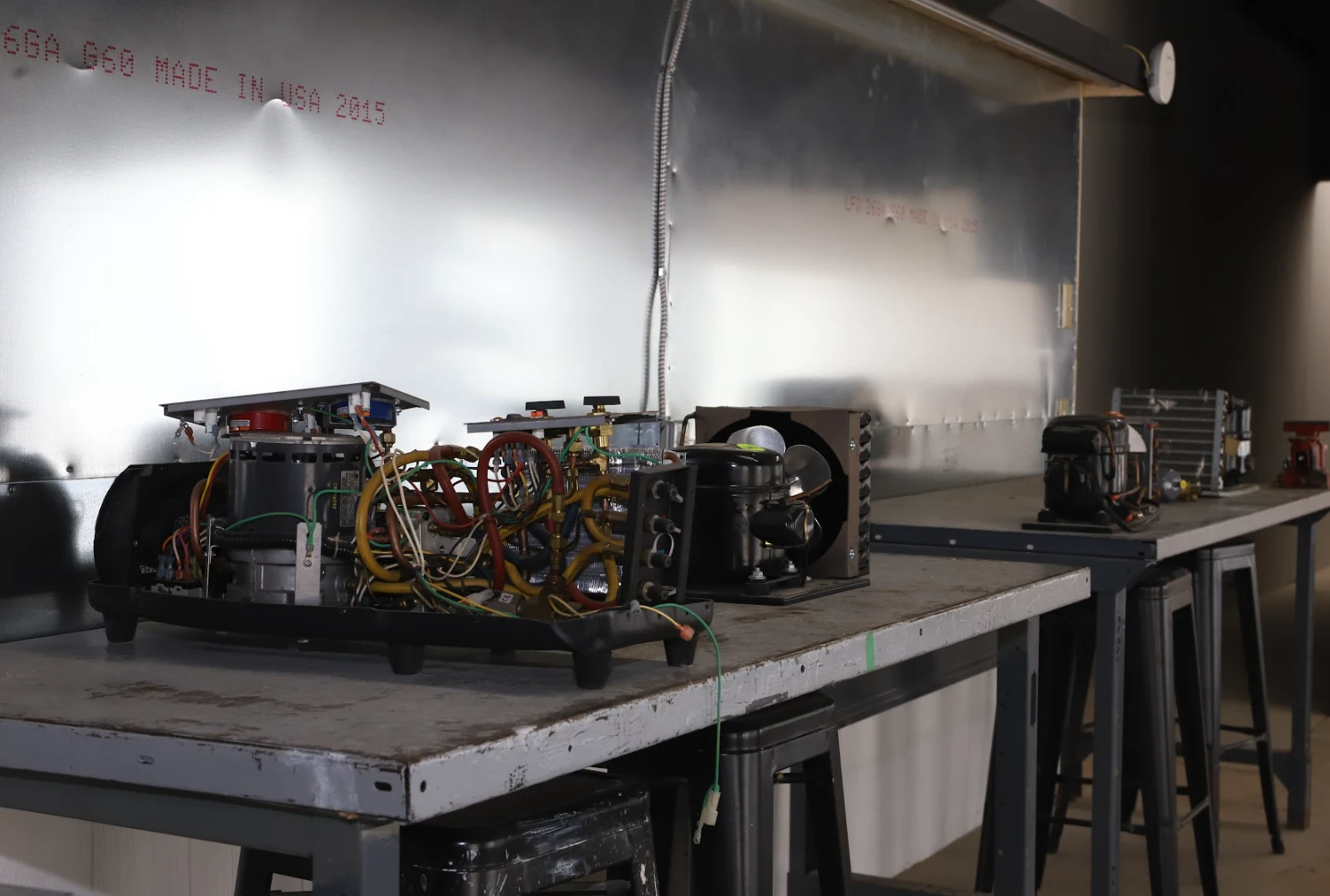
Instruction takes place at DEC’s Skilled Trades Facility, located on DEC’s Monessen campus at 30 Donner Place.
You Asked.We answered.
How long does the program take?
The Residential and Commercial Electrician program takes 16 months, or 60 weeks, to complete. It consists of four semesters, 1,500 hours and 66 credits.
What type of degree will I earn?
Graduates earn an Associate in Specialized Technology degree.
When does the program enroll?
The program enrolls every February, June and October. The first start is October 1, 2026.
Is this a hybrid program?
Yes. General education courses are offered in a hybrid format. These courses consist of 2.5 hours online and 2.5 hours on-ground.
What schedule does the program follow?
Classes are scheduled weekdays between 8:30 a.m. and 7 p.m. In general, students attend four days per week, no more than 10 hours per day, for a total of 20 to 30 hours per week.
The on-ground portion of each hybrid general education course is scheduled as one 2.5-hour block between 8:30 a.m. and 7 p.m.
What are the admissions requirements?
A prospective student seeking admission to this program must:
- Be a high school graduate or possess a General Education Development diploma or recognized equivalency certificate.
- Complete an application form and pay a one-time $50 application fee and a one-time $100 registration fee.
- Request that an official high school transcript be sent directly to the Admissions Department.
- Successfully complete the Wonderlic Scholastic Level Examination with a minimum score of 17.
- Participate in an admissions interview.
- Sign an Enrollment Agreement.
- Sign the Student Acknowledgement for Online Education outlining the technical requirements necessary to enroll in online or hybrid courses.
- Complete the “Are You Ready for Online Education?” assessment.
- Complete an Online Basic Computer Literacy Assessment with a minimum passing score of 70%.